8 Reasons to Ditch Cloud-Based IR Control and Embrace a Local Solution
Infrared (IR) control is a staple of smart home setups, letting you command older devices like air conditioners, TVs, and sound systems without replacing them. However, many IR blasters rely on cloud services that introduce latency, privacy concerns, and frustrating downtime. If you're tired of your smart home acting dumb when the internet goes out, it's time to explore a local, cloud-free alternative. Below are eight key insights into building your own offline IR control system, inspired by the open-source project IR2MQTT.
1. The Cloud Problem: Why Your IR Blaster Might Fail You
Most commercial IR blasters depend on remote servers to process commands. When the cloud service goes down—or your internet connection drops—your ability to control devices disappears. Moreover, these systems often collect usage data and require constant firmware updates that can introduce bugs. The convenience of voice assistants tied to the cloud comes at the cost of reliability and privacy. A local solution, on the other hand, keeps everything running on your home network, ensuring instant responses and full control even during an outage. By moving away from cloud dependency, you regain sovereignty over your smart home without sacrificing functionality.
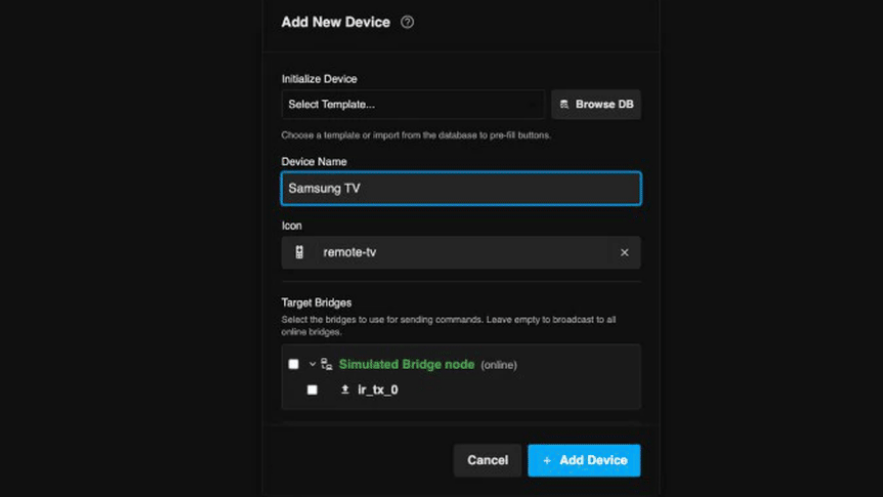
2. Introducing IR2MQTT: A Fully Local IR Control System
IR2MQTT, created by maker Steelcuts, is a lightweight, open-source application that replaces cloud-based IR control with a self-hosted alternative. It integrates seamlessly with Home Assistant via MQTT—a messaging protocol that lets your devices talk locally without leaving your network. The system comprises two parts: a back-end server that manages IR codes and a web interface for configuration. Unlike proprietary solutions, IR2MQTT puts you in charge, with no subscriptions, no external servers, and no internet dependency for basic operations. It’s a perfect fit for privacy-conscious users and those who want a resilient smart home.
3. Hardware Backbone: ESP32/ESP8266 with ESPHome
The physical IR blasting is handled by an ESP32 or ESP8266 microcontroller running a custom firmware based on ESPHome. These tiny boards are cheap, widely available, and can transmit IR signals when paired with a simple IR LED. ESPHome makes it easy to define the hardware configuration and integrate it with your home automation platform. You flash the firmware once, and the board connects to your MQTT broker to receive commands from IR2MQTT. This setup eliminates the need for expensive commercial hubs—you can build multiple blasters for different rooms at a fraction of the cost. The result is a scalable, reliable IR network that answers only to you.
4. No More YAML Headaches: The Web Interface Advantage
Traditionally, adding a new IR device to Home Assistant meant manually capturing codes and editing YAML configuration files—a time-consuming and error-prone process. IR2MQTT replaces that with a clean web interface that lets you configure devices through a graphical interface. You can add devices, assign IR codes, and test them without ever touching a YAML file. This lowers the barrier for beginners while still offering advanced options for power users. The interface communicates directly with the back-end, making changes instantly and storing them in a local database. It’s a major upgrade in usability compared to the manual scripting that many DIY projects require.
5. Tap Into Extensive IR Code Databases
One of the biggest hassles of IR control is finding the right codes for your specific appliance model. IR2MQTT connects to large, community-maintained databases of IR codes, such as LIRC (Linux Infrared Remote Control) and other open repositories. Instead of hunting for codes online or using a learning remote, you can search by brand and model directly from the web interface. In many cases, the correct code set is already available, so setup becomes as simple as a few clicks. This access to a vast library saves hours of troubleshooting and lets you control devices that other systems might not support out of the box.
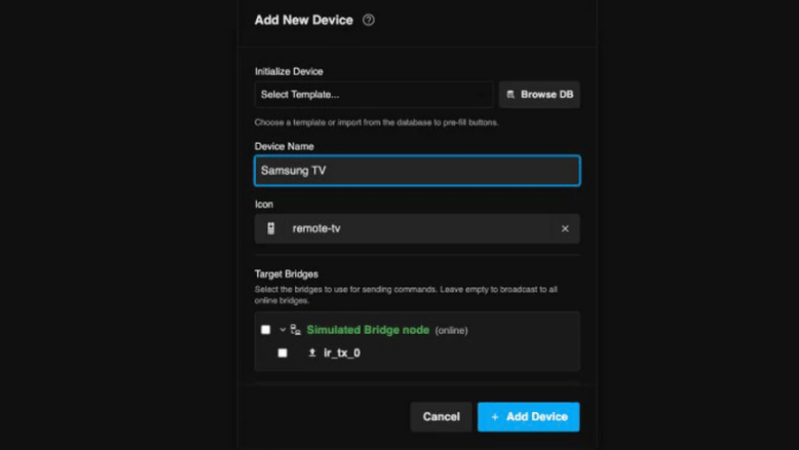
6. Quick Device Lookup: From Frustration to Ease
With integrated databases, getting your air conditioner or TV to work is often as easy as selecting it from a list. The IR2MQTT web interface provides a search function where you enter your device’s brand and model number. The system then fetches the relevant IR codes and presents them for immediate use. You can test multiple code sets until you find the one that works, all without leaving the browser. This streamlined approach contrasts sharply with the tedious process of capturing raw IR signals with a receiver or guessing codes. It transforms a complex integration into a simple, one-time setup task.
7. DIY Flexibility: Customize and Expand Your Control
Because IR2MQTT is open source and runs on standard hardware, you have full freedom to customize your setup. Want to add a new device not in the database? You can capture its IR codes using a learning remote and manually add them through the interface or by editing a file. Need to combine IR control with other sensors? The MQTT integration makes it trivial to trigger IR commands based on temperature, motion, or time schedules. The system encourages tinkering—whether you’re a seasoned hacker or a curious beginner, you can adapt it to your needs without being locked into a vendor’s ecosystem. That’s the power of local, open-source control.
8. Minimal Hardware Requirements: Just an IR LED and a Board
At its core, the hardware for this cloud-free IR system is remarkably simple. You need an ESP32 or ESP8266 development board, a single IR LED (with a suitable resistor), and a power source. Optionally, you can add an IR receiver if you want to learn new codes, but for most setups, the LED alone suffices. The total cost is under $10 per blaster. This minimalist approach is a testament to the fact that you don’t need expensive, closed-source devices to achieve professional-grade smart home integration. With a little soldering and some basic configuration, you can build a dedicated IR blaster for every room in your house.
Moving your IR device control off the cloud isn't just a technical exercise—it's a statement about reliability, privacy, and independence. With solutions like IR2MQTT, you can enjoy the convenience of automated home control without the drawbacks of internet dependency. Whether you're a seasoned maker or just starting your smart home journey, the tools and community support are ready for you. Grab an ESP board, an IR LED, and start building a smarter, more resilient home today.