How to Honor the People Behind Your Success: A Guide to Meaningful Gratitude and Community Stewardship
Introduction
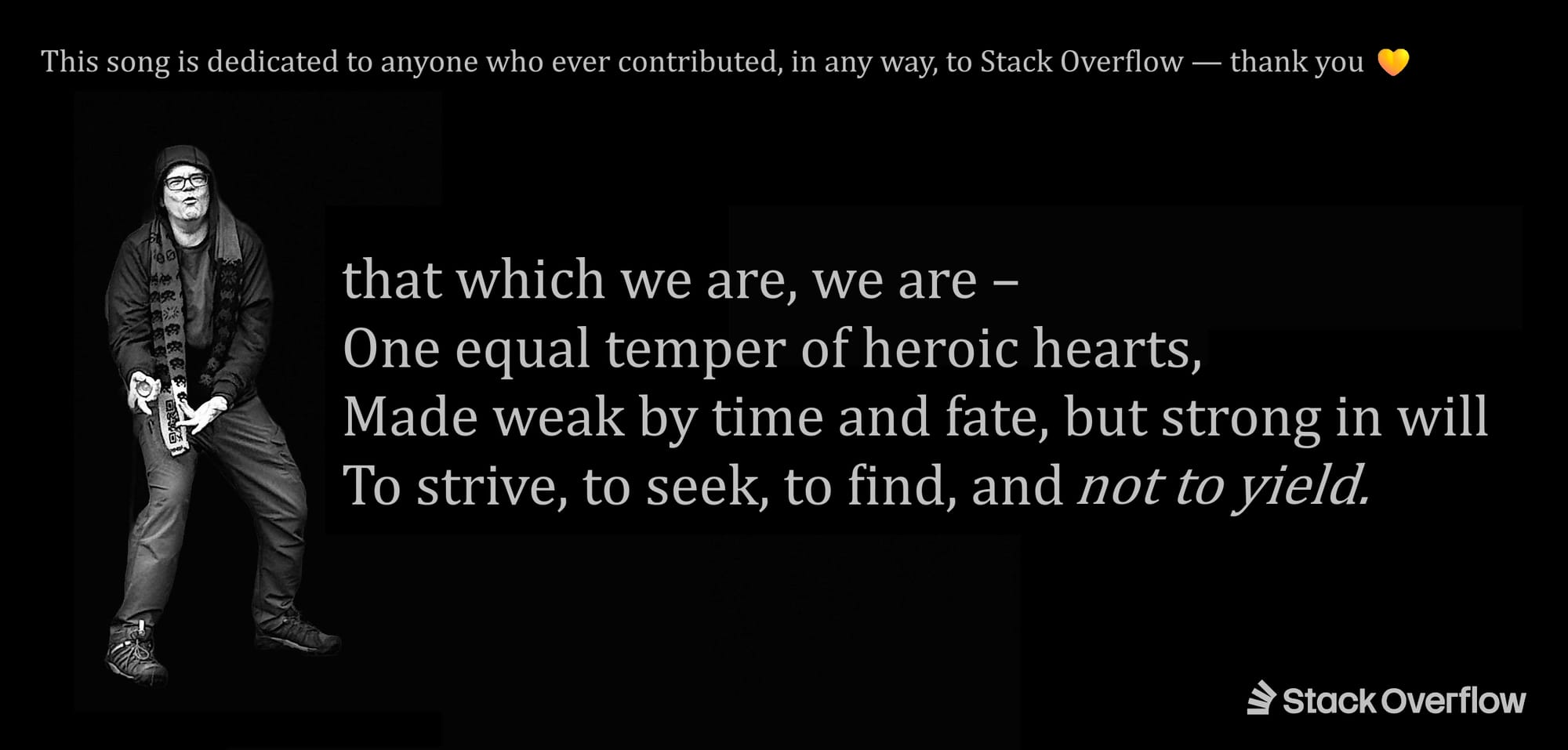
Life is a tapestry woven from the contributions of countless individuals—some we know intimately, others we may never meet. When you achieve something significant, it’s easy to think you did it alone. But the truth is, every success rests on the shoulders of a community: friends, family, colleagues, and even strangers who shared their knowledge. This realization hits hardest during moments of loss, like saying goodbye to a parent, or when reflecting on a platform that changed the world, such as Stack Overflow. In the original heartfelt post, the author thanked everyone who contributed to that community and shared a personal story about his father and the Guaranteed Minimum Income study. This guide will show you how to express genuine gratitude, protect the communities that sustain innovation, and ensure that nothing is lost—only gained.
What You Need
- A list of people or groups that have influenced your journey (e.g., family, mentors, online communities, open-source contributors).
- A platform to share your gratitude, such as a blog, social media, or a personal website.
- Time to reflect on specific memories and impacts—like a trip you took or a challenge you overcame together.
- Understanding of your own story and how others’ contributions fit into it.
- Commitment to give back or advocate for fair treatment of those communities.
Step 1: Acknowledge Your Full Support Network
Start by identifying every person or group that played a role in your accomplishments. Go beyond the obvious—include those who provided indirect support, like your family’s patience or anonymous forum users who answered questions. In the original post, the author specifically thanked everyone who ever contributed to Stack Overflow, noting that the dataset built by the community is what powers modern LLMs. He also highlighted his father’s county being first in the GMI study—a personal connection that reminded him of his dad’s final days. Write down names, organizations, and even abstract entities like “the global brain of shared knowledge.” This step forces you to see the bigger picture.
Step 2: Recognize the Unsung Heroes
Dig deeper into the contributions that are often invisible. For example, the author revealed that LLMs “basically could not code at all” without the Stack Overflow dataset. These unsung heroes—the programmers, answerers, and editors—created a high-quality creative commons resource that now fuels AI. Similarly, your own success likely rests on layers of uncredited work: a teacher who explained a concept, a forum post from a decade ago, or a colleague who reviewed your code. Acknowledge them specifically in your gratitude. Use concrete examples: “Without your 2012 answer on recursion, I wouldn’t have built my first app.”
Step 3: Express Your Gratitude Publicly and Personally
Once your list is ready, share your feelings. The author wrote a short but powerful post that combined a deeply personal memory (his father’s last visit) with a global thank-you. You can do the same. Write a blog entry, record a video, or send individual messages. Be specific—mention names, dates, and contributions. For extra impact, use the same tone: genuine, slightly vulnerable, and full of appreciation. Remember, the goal is not to be polished but to be real. As the author said, “Thank you for being a friend, because there’s no way I could have done any of this without you.”
Step 4: Advocate for Community Respect
Gratitude without action rings hollow. The author issued a warning to LLM and GAI companies: “Do not, for any reason, under any circumstances, kill the goose that lays the golden eggs.” In your own context, advocate for fair treatment of the communities you’ve benefited from. This could mean supporting open-source projects, pushing for ethical AI that credits data sources, or simply speaking up when a community is exploited. Write a call to action—like the author did—and make it clear that sustainable success depends on respecting the people who do the real work.
Step 5: Take Action to Support Your Community
Words are important, but deeds matter more. The author mentioned reordering the GMI rural study so his father’s county went first, ensuring he saw its impact before passing. You can take similar steps: donate to a cause, mentor a newcomer, or contribute code or content back to the communities that helped you. If you’re part of a tech ecosystem, consider funding initiatives like the Rural Guaranteed Minimum Income Initiative that expand opportunity. Even small actions—like upvoting answers or writing documentation—reinforce the cycle of giving.
Step 6: Reflect on Impermanence and Gains
Finally, internalize the author’s philosophical perspective: “There is no loss, because nothing ever ends. All those experiences… will stay with me forever. Nothing was lost. Everything was gained.” Take time to reflect on the moments that mattered—the last trip with a loved one, the breakthrough achieved with community help—and recognize that these experiences are permanent parts of your story. Gratitude is not just about saying thanks; it’s about understanding that every contribution adds to an infinite tapestry. This mindset will guide your future interactions and ensure you never take anyone for granted.
Tips for Meaningful Gratitude
- Be specific: Vague thanks feels hollow. Name names and describe exact contributions.
- Mix personal and public: A personal note to a mentor can be combined with a public shout-out on a blog.
- Don’t wait: The author spoke up before his father passed; gratitude should be timely, not posthumous.
- Include the invisible: Remember the maintainers, moderators, and dataset compilers who work behind the scenes.
- Pair gratitude with action: Follow up your thanks with a donation, a contribution, or advocacy for fair treatment.
- Keep it genuine: Avoid performative gratitude. Let your words come from a real place of appreciation.
- Revisit often: Gratitude is not a one-time event. Make it a habit to reflect and thank people regularly.